
Digital Nomad Essentials: Connectivity, Gear and Lifestyle Tips
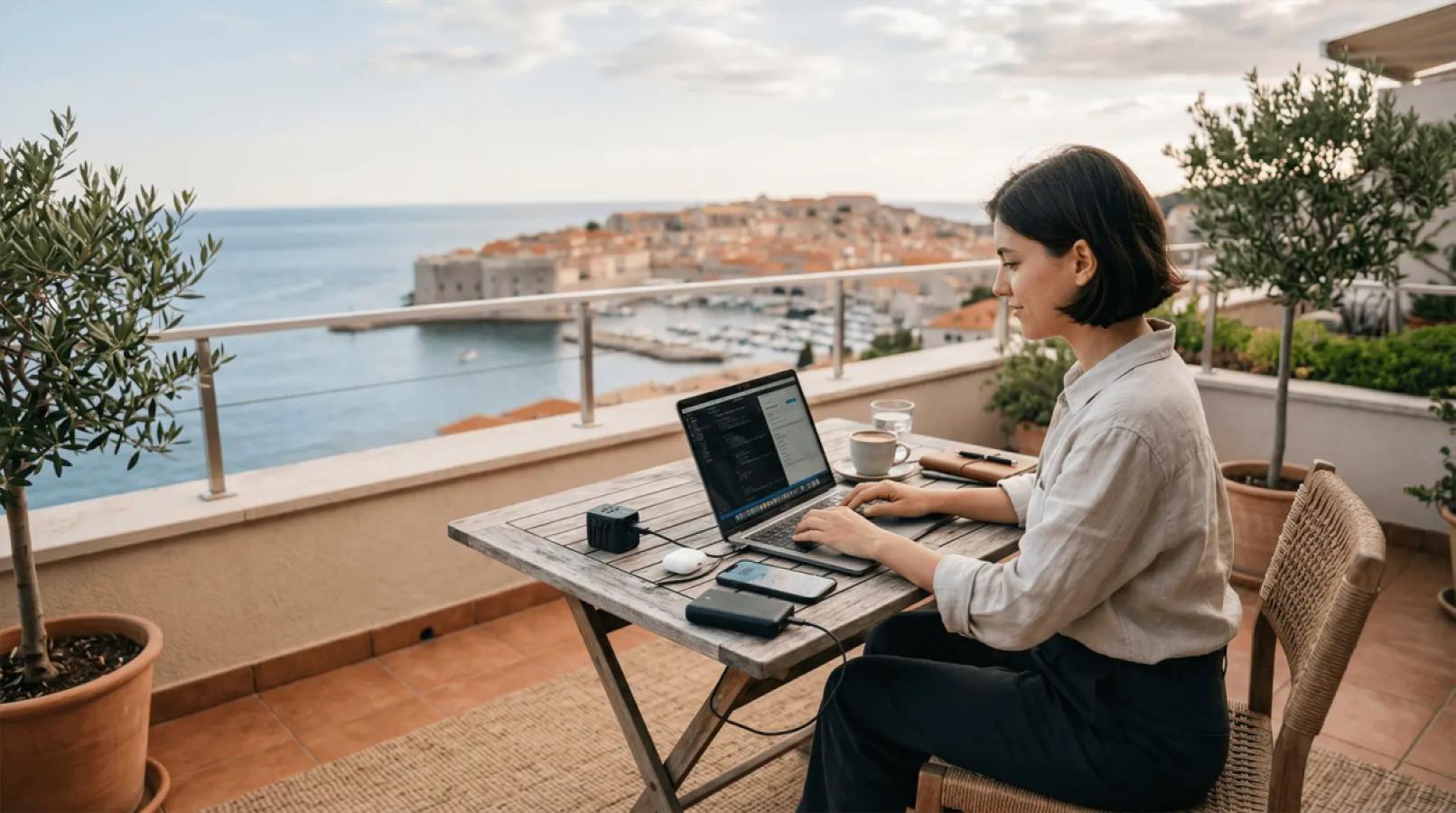
The digital nomad lifestyle is easy to romanticise, but it only works when your setup does. If your internet drops during a client call, your battery dies halfway through a workday, or you arrive in a new country without data, the freedom starts to feel stressful very quickly. The good news is that with the right essentials, you can make remote work while travelling feel smooth, practical and sustainable. This guide covers the gear, connectivity tools and habits that matter most, without the fluff.
Start Here: Connectivity Is Everything
Reliable internet is the foundation of digital nomad travel. Without it, deadlines get missed, meetings fall apart and even simple tasks like opening maps or replying to messages become harder than they should be. Great cafés and nice apartments help, but they are not a connectivity strategy. If you want to work confidently while moving between countries, you need a setup that keeps you online from the moment you land.
Why Hotel Wi-Fi and Café Networks Aren't Enough
Hotel Wi-Fi and café networks can be useful in a pinch, but they are rarely dependable enough to build your workday around. Speeds can vary wildly, crowded networks often become unusable during peak times, and coverage quality changes from one destination to the next. There is also a security risk. Public Wi-Fi is a common target for data theft, which matters even more if you are handling client information, business accounts or sensitive documents while abroad.
How eSIMs Solve the Connectivity Problem
An eSIM is a digital SIM that lets you activate a mobile data plan without inserting a physical card.
For digital nomads, that simplicity matters. You can activate a plan before you land, avoid hunting for a local store, keep your regular SIM in your phone and use dual SIM functionality where supported. It is one of the easiest ways to stay connected as soon as you arrive, whether you are checking directions, joining a call or tethering to your laptop for a backup connection. EscapeSIM is built for this kind of travel, with eSIM coverage across 190+ countries and a straightforward setup process that suits people moving often. If you want a deeper overview, read the ultimate guide to eSIMs or browse EscapeSIM destinations.
Global vs. Country-Specific eSIMs: Which Should You Choose?
The right eSIM depends on how you travel. If you move between countries regularly, a global plan is usually the most convenient option because it keeps you connected without needing to switch plans every time you cross a border. If you are staying in one place for a while, a country-specific eSIM can often give you better value. A simple rule is this: frequent movers should prioritise flexibility, while slow travellers can often optimise for price. You can compare the pros and cons in this guide to global vs local eSIMs, or explore Global eSIM plans directly.
Essential Gear for the Nomad Lifestyle
Packing for the nomad lifestyle is about finding the balance between staying light and staying functional. You do not need to carry an office in your backpack, but you do need a setup that helps you work comfortably and consistently in different environments.
Laptop and Portable Devices
Your laptop is your mobile office, so choose it carefully. Battery life matters more than you think, and 10+ hours is a strong benchmark if you spend long stretches away from power. Weight also adds up quickly when you are moving often, so keeping it under 1.5kg is ideal for many travellers. Processing power should match your work type. Writers and marketers can often travel lighter, while designers, developers and video editors may need more performance.
A few compact accessories can make a big difference to your comfort and productivity. A portable laptop stand improves posture, a lightweight wireless keyboard and mouse make temporary desks more usable, and noise-cancelling headphones can save you during calls in loud cafés, airports or shared spaces. The goal is not to recreate a full desk setup abroad. It is to build a practical, flexible workspace you can use almost anywhere.
Power and Charging Essentials
Running out of power in the middle of a workday is avoidable with the right kit. A high-capacity portable charger with at least 20,000mAh is one of the best items you can carry, especially for long transit days or destinations where power points are limited. A universal travel adapter is non-negotiable if you are moving between regions, and a multi-port USB charging hub helps reduce clutter and keeps your devices topped up from a single outlet.
When your income depends on staying online, charging is not something to leave to chance. A little prep here removes a lot of stress later.
Security: VPN and Data Protection
If you work from public or semi-public networks, a VPN is essential. It helps protect your internet traffic and adds an extra layer of security when you are accessing business tools, financial accounts or client systems outside your home country. You do not need to understand the technical details to benefit from it. You just need to know that it reduces risk.
It is also worth remembering that mobile data connections through an eSIM are generally more secure than relying on shared public Wi-Fi alone. For many nomads, the safest setup is using an eSIM for day-to-day connectivity and a VPN whenever they access work platforms on unfamiliar networks.
Lifestyle Tips for Staying Productive on the Road
Gear and connectivity create the structure, but habits are what make the digital nomad lifestyle sustainable. Without some intentional routines, it is easy for travel and work to blur together in ways that leave you scattered or burned out.
Build a Routine That Travels With You
When your location changes regularly, your routine becomes your anchor. That does not mean every day needs to look the same, but a few repeatable habits can keep things stable. Set working hours that fit your current time zone, create a simple morning ritual and choose a clear point to finish for the day. These habits help separate work time from travel time, even when your surroundings are always changing.
Structure is what stops the lifestyle from tipping into chaos. It also makes it easier to stay focused when everything around you feels new and distracting.
Choose Your Base Wisely
Before you book a destination, look beyond the photos. Check whether there are co-working spaces nearby, what local internet speeds are like and whether the cost of living suits your income and style of travel. A place can be beautiful and still be a poor choice for getting work done.
This is also where having a reliable eSIM helps. You are connected the moment you arrive, before you have tested the apartment Wi-Fi or found a good café. That gives you breathing room to settle in and make better decisions once you are on the ground.
Why Choose EscapeSIM for Your Nomad Connectivity
EscapeSIM is a strong fit for digital nomads because it is built for travellers who need dependable data, not just for one holiday, but across multiple trips and countries. The setup is simple, activation is fast and the flexibility makes sense for people whose work depends on staying connected consistently.
Whether you are bouncing between countries or settling into one base for a month at a time, having mobile data ready before you arrive makes remote work far easier. EscapeSIM helps remove one of the biggest friction points of the nomad lifestyle, so you can spend less time troubleshooting and more time actually working and enjoying where you are.
If you are planning your next move, explore EscapeSIM Global eSIM plans and build your travel setup around connectivity you can count on.
Frequently asked questions
How much does it cost to live as a digital nomad?
Can I use an eSIM as a digital nomad?
Do digital nomads need a VPN?
What countries are best for digital nomads in 2026?
Plans for this trip




More from the blog
How to use an eSIM in New Zealand: coverage realities, the 3G shutdown, setup steps, and matching data plans to your actual trip.

Planning India from Australia? Here's how to pick data, sort coverage, and get connected before you land, without the local SIM queue.

Skip the RICA SIM queue. Here's how an eSIM works for South Africa, how much data you need, and what coverage is really like on safari and in cities.